The self-narration cannot be considered a creative self-narration or a self-expression.
My creative process started with a very simple feeling—"naked" was the first keyword I gave myself when I was a sophomore in college.
I've mentioned the word "naked" countless times. Initially, it resonated with my inability to connect with the female body and the unspeakable yet crucial issues I had. At that time, I tried to express the shock and emotion I felt when I first entered a girls' dormitory in my work. "A space where we can be honest with each other and accept nakedness" is the source of the "Private Bathhouse" series. It even contains a kind of rebellious sentiment using gender as a slogan, or questioning the symbols that correspond to this body. The body, this unchangeable symbol imposed on me, is how I see myself, and also a view of the self that has been otherized. This kind of view is the main reason for nakedness.
The eyes that have been othered act like a censorship mechanism within my body, constantly capturing, revealing, and reminding me of all the inappropriate impurities.
In this process, the self and the othered self are in opposition yet in flux, and I seem to be constantly questioning my identity through creation.
Painting here provides a stage to reveal these processes, even a theater where operators, viewers, and performers interact. The painter is among all three, making painting a form of honesty yet self-indulgence. The images produced through the body are alter egos that the painter cannot sever ties with, appearing simultaneously under the operator's brush. The "who" in the picture inevitably becomes another version of the painter, a self-interpreted version, as unshakeable as a myth.
I often use mythology to describe the interface of a painting.
For me, the narrative or imagery in a painting is something the painter has the right to compose. But when the composition of the painting is displayed on the painting's interface, this interface has a certain unpredictable spirituality. This "spirit" is born from the viewer's belief that there is a "someone" in the painting, which is the identity I am repeatedly pondering. That identity is deduced by the viewer through the composition, color, and narrative of the painting, and a self-contained narrative is formed in the viewer's mind.
In this process, I repeatedly looked at "who" in the picture from the perspectives of the operator, performer (whose alter ego is indistinguishable in the picture), and viewer. This viewing created various naked feelings that were indescribable and difficult to accept. But as the operator, I seemed to be using this manipulating hand to try to reclaim the power to interpret my own identity, or perhaps the self-interpretation of this naked body.
Perhaps for many people, depicting the nude is just a classic subject for recording the beauty of the human body. But when I first drew a nude without a reference, that body seemed to have something to do with me.
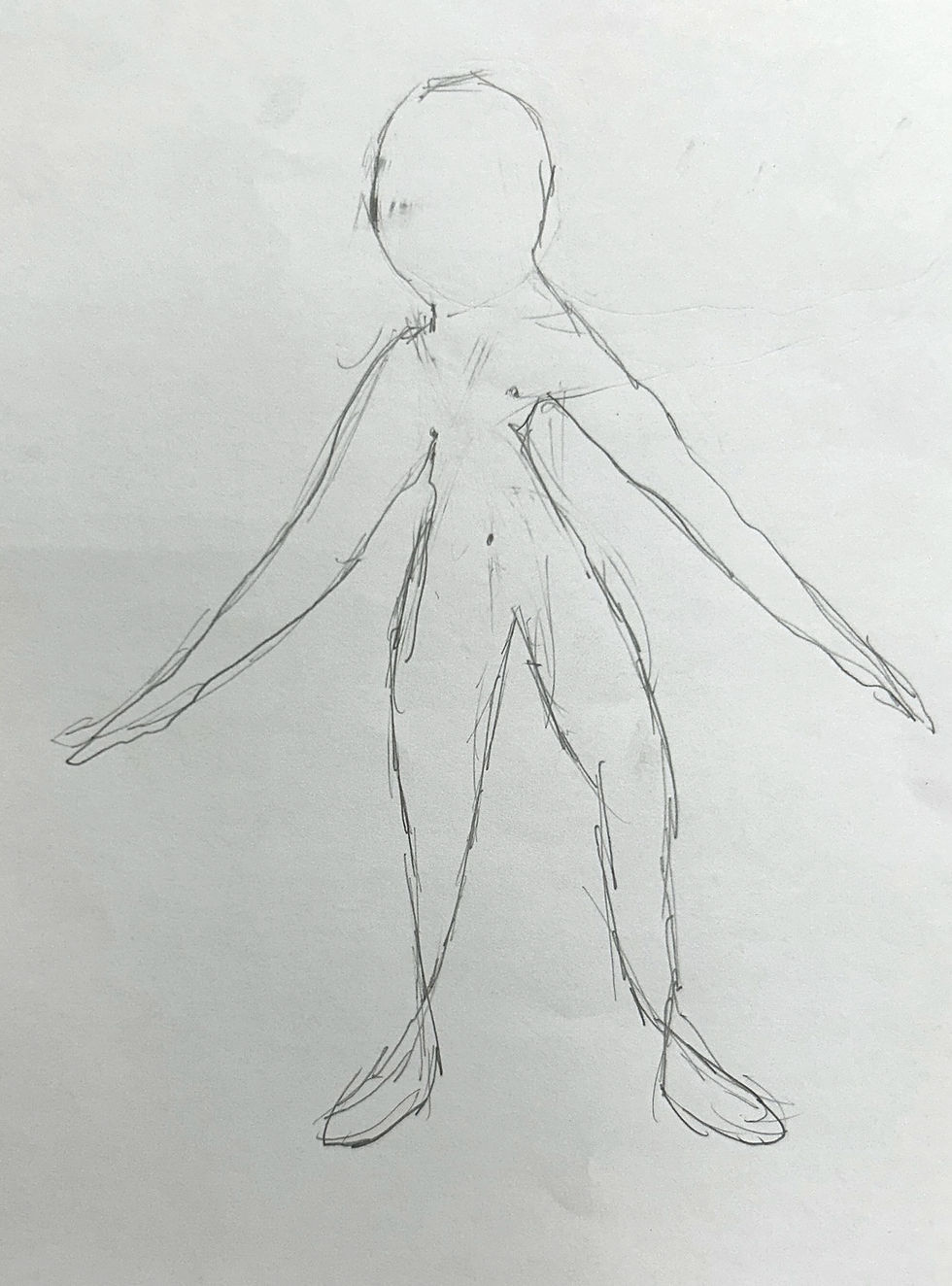
After countless manipulations and viewings of those nude bodies, I observed those distorted human figures with indistinguishable faces and no hairstyles, like bodies without identity. Nudity is the most primal form of identity, and in contemporary viewing, it displays primal nudity as even a gesture of resistance. The figures in those images are the bodies I perceive—the constantly shifting edges of the image, the distortions formed by repeated concealment, the ever-changing skin color, and a pair of prominent breasts.
Statement
A Self-Articulation That Hardly Qualifies as an Artist Statement
My artistic practice began from a very simple sensation— nakedness . It was the first keyword I assigned to myself during my second year in college.
I have repeated the word nakedness countless times. At the beginning, it was closely tied to my inability to fully align myself with the female body—something difficult to articulate, yet profoundly important. At that time, I attempted to translate the shock and emotional intensity of my first experience entering a women's dormitory into my work . a questioning of the symbols imposed upon the body.
The body, as an unchangeable sign forcibly assigned to me, became the way I learned to look at myself—an internalized gaze shaped through being othered. This way of seeing, in which the self is rendered as an object, is what ultimately gives rise to nakedness.
That othering gaze operates within my body like a mechanism of inspection, constantly capturing, exposing, and reminding me of every untimely impurity.
Within this process, the self and the othered self exist in opposition yet remain fluid. Through making work, I find myself repeatedly interrogating my own identity.
Painting offers a stage on which these processes can appear—a theater where the operator, the viewer, and the performer interact. The painter exists simultaneously within all three roles, rendering painting an act that is both confessional and self-indulgent. Images that emerge through the body become inseparable doubles of the painter.
I often use myth as a metaphor for the interface of painting.
For me, the narratives and imagery within a painting are something the painter has the authority to compose. Yet when these compositions materialize on the pictorial surface, the interface itself seems to possess an unpredictable spirituality. This “spirit” is born when the viewer believes that there is a “someone” within the painting—the very identity I repeatedly attempt to examine. Through composition, color, and narrative, this identity is inferred by the viewer and reconstructed once again as a self-captured narrative within their mind.
Within this process, I repeatedly observe the “who” in the image through the overlapping perspectives of operator, performer (the inseparable double within the image), and viewer. This act of looking generates multiple sensations of nakedness—unspeakable and difficult to endure. Yet the part of me that operates seems to use this act of making as a way to reclaim the authority of self-interpretation, or perhaps the authority to interpret this naked self.
For many, depicting the nude may appear to be a classical subject concerned solely with recording the beauty of the human body. However, the first time I painted a nude without reference, that body felt undeniably connected to me.
After countless acts of operating and observing these nudes, I began to notice that the distorted human forms—faceless, without hairstyles—resembled bodies without identity. Nakedness, as a form of identity, is the most primordial state. Within contemporary modes of viewing, the presentation of a raw nude body can even constitute an act of resistance. The figures in my paintings embody the body as I experience it: a constantly scrutinized, fluid boundary; distortions formed through repeated acts of concealment; ever-shifting skin tones; and a pair of unmistakable breasts.
Comments